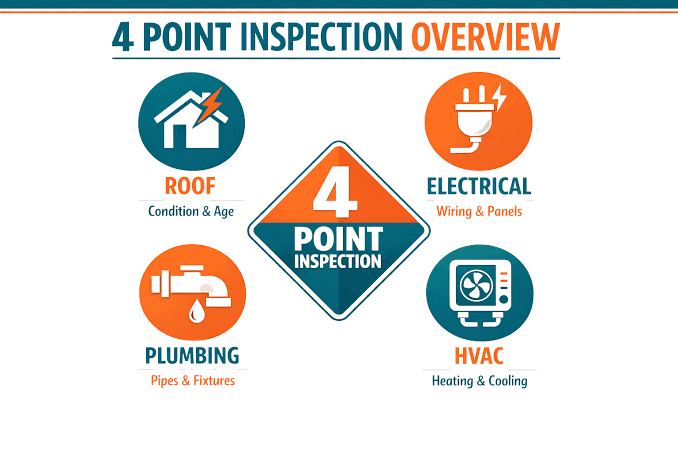
For Florida homeowners, a four-point inspection can play an important role in obtaining or maintaining homeowners insurance. The inspection focuses on four major areas of a property: the roof, electrical system, plumbing system, and HVAC system. Insurance companies use information from these systems to evaluate the condition and risk associated with a home.
If you are searching for how to pass a 4-point home inspection, the best approach is not to think of the inspection as a test that can be passed through shortcuts. Instead, prepare your property, correct obvious problems, gather relevant documentation, and make sure the major systems are accessible for inspection.
A four-point inspection is a specialized inspection commonly requested by insurance companies, particularly for older homes. Unlike a comprehensive home inspection, it concentrates on four major systems: roofing, electrical, plumbing, and heating and air conditioning.
The inspector documents the type, age, condition, and visible deficiencies associated with these systems. The resulting report helps the insurance company determine whether the property meets its underwriting requirements.
Because insurance companies can have different requirements, there is no universal checklist that guarantees approval. However, homeowners can take several practical steps to prepare.
The roof is one of the most important areas to review before a four-point inspection.
Look for visible signs of deterioration, missing or damaged materials, leaks, damaged flashing, exposed areas, or other conditions that could raise concerns. You should also know the approximate age and type of your roofing system.
If you have documentation from a previous roof replacement or repair, keep it available. Permits, invoices, warranties, and other records may help establish the history of the roof.
Florida's Department of Financial Services notes that a four-point inspection evaluates the roof's type, age, and condition, including visible signs of damage or deterioration.
Electrical problems can create significant safety and insurance concerns.
Before the inspection, make sure the electrical panel and relevant components are accessible. Look for obvious issues such as damaged covers, exposed wiring, loose components, or signs of overheating.
If electrical work has been performed previously, keep records of upgrades or repairs. Documentation may help provide a clearer picture of the home's electrical history.
Do not attempt electrical repairs yourself simply to prepare for an inspection. If you notice a potentially dangerous condition, have the work evaluated by an appropriately qualified electrical professional.
Plumbing is another major component of a four-point inspection.
Homeowners should look for visible leaks beneath sinks, around toilets, near water heaters, and around exposed plumbing connections. Pay attention to signs of water damage, corrosion, or deteriorated materials.
The water heater should also be accessible, and homeowners should know its approximate age.
The Florida Department of Financial Services indicates that the plumbing portion can include the water heater, plumbing types, pipe materials, leaks, and whether the plumbing system has been updated or repiped.
Fixing an obvious leak before an inspection can prevent a small maintenance problem from becoming a documented deficiency.
The heating, ventilation, and air-conditioning system is the fourth major area.
Make sure the HVAC equipment is accessible and operating normally. Remove stored items that block access to the equipment, and keep available any documentation showing installation, replacement, or major servicing.
The inspector may document the equipment's age, condition, operation, and visible damage.
Regular HVAC maintenance is useful not only for an inspection but also for the long-term performance of the system.
One of the simplest ways to prepare for a 4 point home inspection is to make sure the inspector can reach the systems that need to be evaluated.
Move boxes, furniture, storage items, or other belongings that block:
The Florida Department of Financial Services' inspection guide notes that inspection reports include photographs of areas such as the home's sides, roof slopes, water heater, plumbing, electrical panels, HVAC equipment, and noted hazards or deficiencies.
Good access makes it easier for the inspector to document the property accurately.
Documentation can be particularly useful when a home has had significant upgrades.
Before your inspection, gather documents such as:
These documents do not automatically change the condition of a system, but they can provide useful information about its age, history, and previous work.
Preparing for a four-point inspection does not mean remodeling the entire house. Focus on visible, practical issues.
Repair active plumbing leaks, address obvious roof damage, correct unsafe electrical conditions through qualified professionals, and maintain HVAC equipment.
Also take care of general property maintenance that could make the home appear poorly maintained.
Florida's Department of Financial Services notes that insurers may consider the condition and maintenance of a property when evaluating underwriting risk.
One of the worst strategies for homeowners is attempting to conceal a deficiency.
Covering damaged areas, blocking equipment, removing labels, or making unqualified repairs can create more problems rather than solving them.
The purpose of an inspection is to document the property's actual condition. If an issue is discovered, knowing about it allows you to determine what professional repair or documentation may be appropriate.
No inspection preparation can guarantee that an insurance company will approve a property.
Insurance companies establish their own underwriting criteria, and the Florida Department of Financial Services specifically notes that insurers may have different requirements.
That is why the better question is not simply how to pass a 4-point home inspection, but how to prepare the home so its major systems can be accurately evaluated and obvious deficiencies can be addressed beforehand.
A four-point inspection may be requested when purchasing insurance for an older property, renewing coverage, or obtaining a policy with an insurer that requires this type of documentation.
If you know an inspection is coming, give yourself enough time to review the four major systems before the appointment. Finding a problem the day before an inspection can leave little time for professional evaluation or repairs.
Learning how to pass a 4-point home inspection is really about preparing your property for an accurate assessment. Start with the roof, electrical system, plumbing, and HVAC. Make important areas accessible, gather records, address obvious maintenance concerns, and avoid trying to hide deficiencies.
A well-maintained home is easier to inspect and may provide a clearer picture of its condition to both the inspector and insurance company. In 2026, taking a proactive approach can help homeowners avoid last-minute surprises and make the insurance inspection process more straightforward.

This post has been authored and published by one of our premium contributors, who are experts in their fields. They bring high-quality, well-researched content that adds significant value to our platform.









Plumbing Guide provides practical plumbing tips, helpful guides, maintenance advice, and easy-to-understand information for homeowners and DIY enthusiasts.