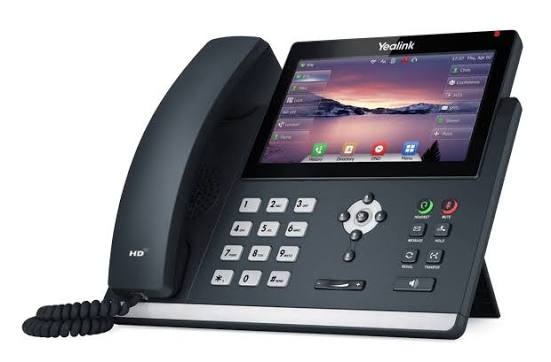
The telephone is still an important business tool, but the way companies use it has changed. Employees no longer need to be tied to a traditional phone line or a particular desk to stay connected. Businesses with multiple offices, remote employees, and customers in different locations need communication systems that can adapt to the way they actually work.
This is where VoIP Phones can offer a practical alternative to traditional telephone systems. VoIP, or Voice over Internet Protocol, uses an internet connection to transmit voice communication rather than relying entirely on conventional telephone infrastructure.
For businesses, the appeal is not simply making calls over the internet. A well-planned VoIP environment can bring calling, extensions, call management, and other communication features into a more flexible system.
VoIP phones are communication devices designed to make and receive calls using IP networks. Instead of sending voice signals through a traditional telephone network, the system converts voice into digital data that can travel through an internet or business network.
To employees, the experience can feel much like using a conventional office telephone. They can answer calls, dial numbers, transfer conversations, and use extensions. Behind the scenes, however, the communication infrastructure is based on network technology.
This makes VoIP particularly interesting for businesses that already depend heavily on their IT networks.
Traditional telephone systems can become difficult to manage as a company grows. Adding employees, changing extensions, connecting different offices, or supporting remote workers may require additional infrastructure.
VoIP can provide greater flexibility because communication services can be integrated with the organization's network environment.
For example, a company with offices in different locations may be able to create a unified communication structure in which employees can contact colleagues using internal extensions, even when they are working from another office.
The exact capabilities depend on the system, network, and service provider, but the underlying idea is simple: business communication becomes more closely connected to the company's digital infrastructure.
One of the biggest advantages of internet-based communication is flexibility.
Employees are increasingly working from home, travelling between offices, or splitting their time between different locations. A communication system that depends entirely on a physical desk can make this arrangement more complicated.
With an appropriately configured VoIP solution, employees may be able to use business calling services through compatible devices and applications from different locations.
This can help businesses maintain consistent communication even when employees are not sitting in the same office. Customers can continue reaching the company through established business numbers rather than having to keep track of individual employees' personal contact details.
Modern business telephone systems can provide considerably more than basic voice calls.
Depending on the solution, businesses may have access to features such as call forwarding, voicemail, call transfer, conference calling, automated attendants, call queues, and extension management.
These features can make a noticeable difference in customer-facing environments.
Consider a company that receives dozens of calls each day. Without organized call routing, reception staff may have to manually direct every conversation. A properly configured system can route calls to the appropriate department or available employee.
The objective is not to automate every interaction. It is to make routine call management easier so employees can focus on the conversation itself.
Business communication needs rarely stay the same.
A company may start with ten employees and eventually grow to fifty or more. It may open another branch, reorganize departments, or introduce a remote workforce.
VoIP Phones can make some of these changes easier to manage because extensions and communication services can be configured through the underlying network and telephone platform.
However, scalability still depends on the quality of the network infrastructure. Businesses should make sure their internet connection, internal network, switches, cabling, and other IT components can support the expected communication traffic.
Absolutely.
Because VoIP communication depends on network connectivity, factors such as bandwidth, latency, packet loss, and network congestion can affect call quality.
Employees may notice problems as delayed audio, interruptions, dropped calls, or distorted conversations when the network is not properly configured.
For this reason, businesses should not treat VoIP as simply a matter of purchasing telephone handsets. Network assessment and configuration should be part of the implementation process.
Quality-of-service settings, network segmentation, appropriate switches, reliable connectivity, and proper configuration can all contribute to a better calling experience.
A centralized communication system can simplify how a business manages its telephone environment.
Instead of maintaining disconnected systems for different departments or offices, businesses can potentially bring communication services into a more unified platform.
This can make tasks such as adding users, changing extensions, configuring call forwarding, and managing permissions easier for administrators.
It can also reduce the need to maintain completely separate communication arrangements when employees move between offices or work remotely.
The cheapest option is not necessarily the best option.
Businesses should first understand how their employees communicate and what problems they are trying to solve. Call volume, number of users, office locations, remote work requirements, existing network infrastructure, and desired features should all be considered.
Security also deserves attention. VoIP systems should be configured with appropriate access controls, strong authentication, software updates, and network security measures. Administrators should also monitor unusual calling activity where appropriate.
A reliable backup internet connection may be worth considering for businesses that depend heavily on telephone communication.
A VoIP system can appear simple from the user's perspective, but proper implementation requires attention to both telecommunications and IT infrastructure.
Professional installation can include configuring handsets, extensions, call routing, network settings, security controls, and other system components. It can also help identify network issues that could affect call quality before employees begin relying on the service.
Ongoing support is equally important. As the company grows, administrators may need to add extensions, modify call routes, troubleshoot devices, or integrate new communication features.
Business communication is no longer limited to a telephone sitting on an employee's desk. Companies need systems that can support offices, remote workers, multiple departments, and changing business requirements.
VoIP Phones can provide that flexibility by combining traditional business calling with modern network technology. When properly planned, they can help businesses manage calls more efficiently while giving employees greater freedom in how and where they communicate.
For any organization considering VoIP, the best starting point is to assess its current communication challenges and network capabilities. The right solution should fit the business not force the business to change the way it works simply to accommodate the technology.

This post has been authored and published by one of our premium contributors, who are experts in their fields. They bring high-quality, well-researched content that adds significant value to our platform.












Plumbing Guide provides practical plumbing tips, helpful guides, maintenance advice, and easy-to-understand information for homeowners and DIY enthusiasts.